2026-09-28 · Rick Delgado
Why Salt Air Affects AC Units Near San Diego Beaches
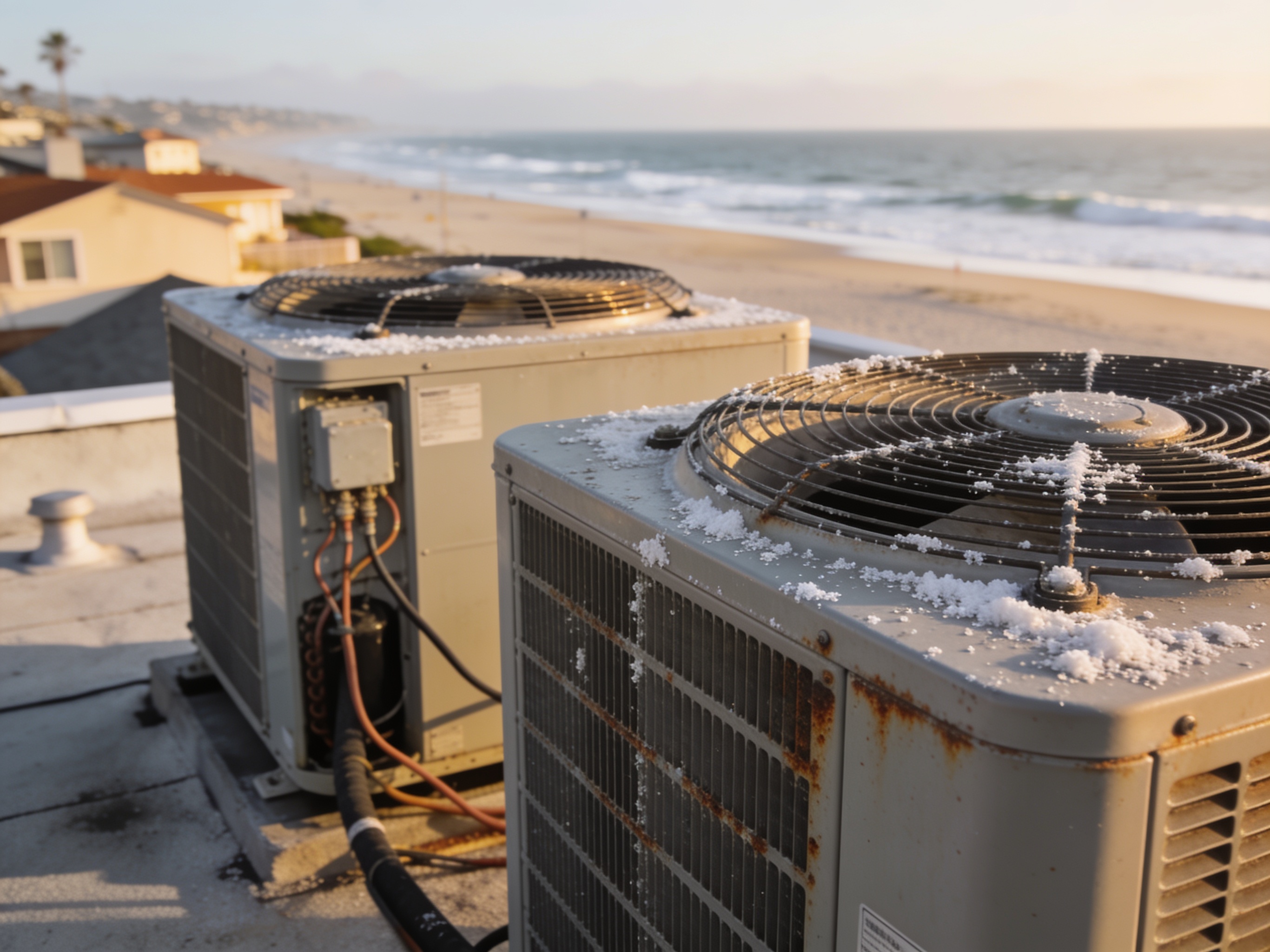
Salt air near San Diego beaches accelerates corrosion on outdoor condenser coils and fins, often shortening the reliable service life of AC units in Pacific Beach and La Jolla compared with inland locations in San Diego County. The mild coastal Mediterranean climate keeps temperatures moderate year-round, yet constant onshore breezes carry sodium chloride that settles on metal surfaces and initiates pitting once moisture is present. This process starts within the first few seasons after installation and compounds during the occasional marine layer events that increase humidity. Units sited within a few blocks of La Jolla Cove or the Pacific Beach shoreline show visible fin degradation sooner than those farther inland.
How Salt Air Corrodes AC Components
Salt particles carried by prevailing winds land on aluminum fins and copper tubing of condensers. Once the salt mixes with morning dew or the marine layer, it forms an electrolyte that drives galvanic corrosion between dissimilar metals. Over time the fins thin and bend, airflow drops, and the compressor works harder to reject heat. In older homes common along the coast, original equipment often lacks factory-applied protective coatings, so the damage appears earlier. Technicians routinely find pitted coils that must be replaced rather than cleaned when the unit reaches eight to ten years of service in these microclimates.
Why Pacific Beach and La Jolla Units Face Faster Wear
Pacific Beach and La Jolla sit directly on the coastline where salt deposition is highest. Homes here are frequently two- or three-story structures with rooftop or side-yard condensers exposed to unobstructed ocean winds. The same breeze that keeps indoor temperatures comfortable also delivers a steady supply of chlorides that standard fin stock cannot resist indefinitely. Inland neighborhoods such as Mission Valley or North Park receive less salt because the terrain and distance filter the aerosol. Residents in Coronado and Chula Vista experience intermediate exposure depending on exact proximity to the bay or ocean.
Maintenance Practices That Slow Salt Damage
Regular rinsing of condenser coils with fresh water removes accumulated salt before it embeds. Scheduling HVAC Maintenance twice a year lets a technician check fin condition, apply approved coatings when needed, and verify that drainage keeps standing water away from the unit base. Homeowners can also request upgraded coated coils at replacement time, which adds measurable resistance in beach settings. These steps do not eliminate corrosion but measurably extend intervals between major repairs.
When to Schedule Service in Coastal San Diego
Persistent high head pressure, ice formation on the indoor coil, or visible white powder on the outdoor fins signal advancing salt damage. Addressing these signs early prevents compressor failure that would otherwise occur during the first summer heat spike after the marine layer retreats. Readers planning ahead can review Preparing Your AC for San Diego Summer Heat Spikes for additional timing guidance specific to the county's weather pattern. Units in Pacific Beach that receive prompt attention typically avoid emergency calls during peak demand periods.